
Let’s start with first impressions. A friend of mine has attended the Connected Child class this therapist offers. Another several of them have consulted with her for adoption-related attachment issues. A little boy whom we babysat for respite was eventually adopted by her. I was pretty sure she was a woman with a large family. So my first impression became a little confused when she drove up our driveway last week and walked through our front door.
She drove in a Mazda Miata.

Big family car?
And I don’t know if she makes it to five feet tall. She surely couldn’t have a large family or have qualifications to parent kids from hard backgrounds, much less counsel people.
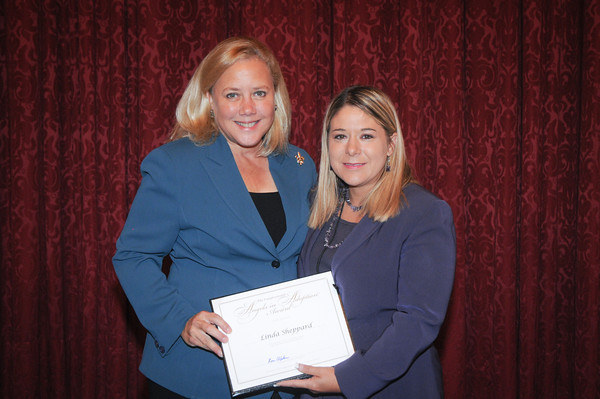
She’s the lady on the right. 😉
Umm… forgive me Linda! It just took a few words of conversation for that wrong first impression to melt into a little puddle. Our esteemed attachment therapist has a Bachelor’s in Family Therapy, a Masters in Counseling Studies, a Certificate in Therapy with Adoptive and Foster Families, another Certificate in Attachment Therapy and is pursuing two Doctorates at the same time (Organizational Psychology and Christian Counseling). And… Linda Sheppard is short. (Being tall apparently isn’t required for awesomeness.)
And yes, she has fourteen children, most of them adopted. She didn’t have to list off the qualifications to make my puddle, though. Her confidence, her familiarity with our situation and her practical experience made the biggest impression on me. And a mom with fourteen kids who still even owns cute dresses and black tights has at least one super power. I am a big fan of super powers. (I had my suspicions when I first read her business card… umm… when I first mis-read her business card. I thought it said Therapist and Family Life Enhancer. (Really is Therapist and Family Life Educator… same thing, right?)
Ok, ok. Onto our in-home appointment. ($150 for those friends of mine who might want an in-home appointment. She also offers Skype appointments for those who are not local)
Subjects covered:
Attachment – capacity, to whom, preschool
Control – importance to child, strategies
Meltdowns – situations, strategies, behaviors, communicating
Communication – symbols, transitions
Social boundaries – why, how
Long-term view… offering hope.
Attachment:
One thing I was glad to learn is that people studying attachment no longer think that children must ONLY attach to one person. If you look at attachment as though it’s an undeveloped/underdeveloped muscle, then attaching to anybody is going to help. It’s well agreed upon that if a child has formed attachments before, that they are more capable of forming/transferring that attachment to a new person. People writing child profiles (for adoption) will make a note if the child has an attachment formed already, such as a preferred caregiver. That implies that you’ll be helping them transfer attachment to you as a parent, instead of starting from… well… non-attachment. A child who has never formed attachments (is “unattached”) may struggle more – or will at least struggle differently. There is nothing “there” already to work with.
With Jordan, we feel like we are starting from square one. He doesn’t prefer any person over another and is happy to give his affection (and safety) to anybody. He doesn’t express stranger anxiety. Neither does he express happiness when I return from being away. He is unfamiliar with the concept of a “special” person, with the concept of parent. We need to encourage Jordan’s attachment to us, his parents especially. And his siblings. But, Linda didn’t think that we had to become “attachment nazis” at this point and prevent any potential bonding with others, such as preschool teachers. I made a mental note to ask the preschool teacher to let me know if Jordan begins to develop an attachment to anybody at preschool. Linda did offer the encouraging opinion that she thinks that Jordan is quite capable of attaching and probably will. From the mother of twelve children who came by adoption, that was good to hear.
Control:
He is also unfamiliar with the concept of a person who can protect him, whom he can depend on, and who is also in control of his life, his surroundings… and who is still trustworthy. He feels the need to be in control. Yes, he may be just a little guy with a delayed mental development… but perhaps that makes this need for control even greater. He has been out of control for the bad things in his life. Because he doesn’t understand speech, or much communication at all, things pretty much broadside him. He was a pretty traumatized little boy when we got him home. So, whatever he can do to make him feel in control has got to make him feel more safe. Predictable.
Routine. Stubbornness. Food preferences. Familiar places. Stimming. Self abuse even. Did I say routine already?
Linda encouraged us to find ways where we can assume control with Jordan without it being threatening. (And come on, people. If anybody here is going to tell me that we should not “control” our children… how else is one to teach, protect and love a little boy? One with or without mental and emotional disabilities?) For example, we should find opportunities to initiate play time and cuddle time. Jordan would prefer that initiations were left to him and to move away from us when we initiate. A giving back and forth game (or “catch” in Jordan’s case) is a pass back and forth of control. Trading control even in little ways will help us with the bigger things. Linda also suggested putting a game that Jordan likes up where he can’t reach it. This game can then become something that only we can initiate.
Jordan does let us initiate and sometimes he will even let us cuddle on our terms. We feel encouraged to keep on with this gentle dance of trust.
I asked if I should continue to spank his hand for no-no’s or do hand-over-hand practice with toys that he doesn’t like. She said that from an attachment perspective that this isn’t the best thing. It needs to be balanced against his need for safety. And I’ll add here, that I’m balancing it against Jordan’s need to be stretched. Brian and I are in agreement, however, that his attachment and emotional development are our highest priority with him. We will be able to correct, encourage and teach him from a much better platform with more developed attachment.
Meltdowns:
Let’s move onto meltdowns. We have meltdowns every day. Little ones and medium ones. And now and then we have full blown meltdowns, triggers known or unknown. In the mornings (and while Linda was here), Jordan was a happy, relaxed, exploring little boy. As the day progresses, however and as he grows a little tired or bored, things change. He becomes angry and frustrated and, I believe, he feels less in control of himself and his surroundings. He is really hard to reach when he is like this. He’ll want on your lap and then back down again. He’ll find increasingly large toys to chuck across the room. He may whine or cry or even begin to laugh in a stressed-out way. We talked to Linda about holidays and other large triggers and these are some things we learned:
It can be helpful to speak with the family/friends that you’ll be around before the event to help them know your strategies for helping Jordan cope and avoid larger meltdowns.
Giving Jordan a chance to leave the room (to somewhere quiet and controlled) and then come back can be helpful.
We can try mimicking his behavior (rocking, moaning, etc.) to try and reach him.
Ok, so I guess we didn’t think of a whole lot of things to do… just try to help those situations happen less often and to help him calm down again when they do.
Communication:
Communication would really help with those meltdowns, don’t you think? For us to be able to prepare Jordan for places we’re going…. “Hey Jordan. We’re going to go pick out a Christmas tree. It’ll be cold out and there might be noisy tree-shaker tools, but we can go sit in the car if you get too cold or overwhelmed. It might feel like it takes a long time, but we’ll go home right after hot chocolate. Do you have anything you want to do while we’re there?”) For Jordan to be able to tell us what he needs… “Mom, please don’t take me in public bathrooms. They remind me of the elevator at the orphanage and bad things always happened after I went in the elevator. I think they’re scary.” (Ok, I don’t know why small rooms like public restrooms or elevators or similar places freak Jordan out, but they do.) And for little things… “Mom, I’m hungry!” or “I’m stuck.” or “Will you play with me?”
Communication really is a wonderful thing! Jordan has actually made really huge strides on this. When he came home, he would not cry when hurt or upset. He fell all the way out of his crib onto his head on the hardwood floor and didn’t cry. He hurt. I know he did! But the only time he cried was when he was so incredibly overwhelmed that there was nothing else to do. He didn’t understand the CONCEPT of communication. You know, that you can do something to get somebody to respond to you. That it can be fun. And helpful. Oh, he thought we were being mean to him when we first tossed a blankie on his head to play peek-a-boo! We had to leave that game alone for months and months.
Now, at a year home, he UNDERSTANDS! He understands that we are part of his world. That we can play with him, help him, cuddle him, carry him, feed him… and that he has some measure of control over this. For a long time I have loved the sound of his whining when he’s hungry. So glad he’s telling me about it! But now that he is “telling” us about his needs all the time, I have needed him to expand that as it’s driving me a little crazy. haha It’s really frustrating for him also, to be asking me for something to eat (by whining unendingly as I cook). He is having to learn more difficult things like wait, sit outside the kitchen, and don’t touch the stove. Ok, I’m getting on a tangent.
Linda didn’t encourage me to use mealtimes as a time to force him to begin signing to us. It would probably work, but it isn’t so great on our relationship to deny food in order to produce behavior. Since our relationship is what we’re trying to develop… well, we’ll let that be. In any case, we thought of a strategy for helping him learn to ask for food with symbols. He would go get a bowl that we can put out near mealtime and bring THAT to us (while whining or not). Or, we could use a spoon. I’m leaning towards a plastic spoon right now, because during the two times we helped him bring the bowl to the table at meal time, he threw it and broke it. Poor plastic bowl. Anyway, communication with symbols seems like a good step between complaining for attention and understanding speech. If we can sometime help him understand photos, then he could begin communicating his needs with a picture book with helpful photos in it. (bowl of food, his favorite toy, car, etc.)
Moving on to…
Transitions:
To help communicate transition times to Jordan when he doesn’t understand, we bought an electronic bell that has seven different tones. I’m going to sit down and write out our daily routine from Jordan’s perspective. Then I am going to assign a bell sound for regularly occurring transitions. Then, he will learn to associate the bell tone with the changes. (Meal time now! Time to go somewhere in the car! Quiet time now. Etc.) I’ll share my daily schedule/routine sometime soon after I’ve got it figured out.
Social Boundaries:
I saved the best for last. Social boundaries and a longer-view perspective. Social boundaries first.
What are they? Why are they important? One example will probably make that clear. Currently, Jordan would go up to any stranger at the grocery store and be willing to be taken home with them. Social boundary… fail. Safety… big issue!
Longer term view: Jordan when he’s 10 (or 20, or 30!) going up to somebody he doesn’t know at all or doesn’t know well and holding their hand, giving them a hug… and going home with them. Ok. Social boundaries… uncomfortable! Safety… still a big issue! Folks, Jordan can take a long time to learn something. So there are certain behaviors that he needs to start learning now, even before he understands them. I think he will learn them more easily by already knowing “the routine.”
Linda offered the input that we can do just a little bit of implementing at a time. We don’t have to do everything at once.
The first thing we’re going to pick with Jordan is to set rules about whose lap he can plop himself down on. That will not be too hard to implement. We can tell visiting friends to steer his little bottom to the floor next to them. We can all still play with him and talk with him, but no lap time except with family.
Speaking of family, Brian and I have to do some thinking about where to draw the familiarity “lines” for Jordan. We don’t have the opportunity to visit with family more often than once a month at most and although the girls have grown familiar with extended family, I don’t think that Jordan or baby Carolyn have. They are too “young” still. So, we can try to help Jordan become more familiar by trying to show him pictures of extended family… but he isn’t interested in photos yet. We shall see. I’ll let you know, family! Remember, we are trying to figure out how to teach Jordan safe behaviors while still being able to enjoy life and family to the fullest. We need your help with this and aren’t trying to push any of you away.
Ok – onto the hope from long-term perspectives. You know, thinking about how repeating behavior over and over for a few years…. Jordan WILL figure it out. And… that means that many of the things that we’ve been repeating this last year with some discouragement about it ever working (such as signing to Jordan) will eventually work. Jordan will eventually pick up on signing and understanding speech! Hey! That’s awesome!
Ok folks, I’d like to review this and edit it to make it more cohesive and helpful. But I don’t have time for that. 🙂
Cheerio!