WARNING TO MY NORMAL READERS – YOU PROBABLY DON’T WANT TO READ THIS. There’s a little text and then pictures… you know, with a real placenta. REALLY. Placentas are bloody. Please don’t read this blog if you shouldn’t and stop being my friend. If you must… pretend it’s hamburger, ok?
…
…
…
For many people, the idea of encapsulating a placenta is a ray of hope to decreasing many post-partum pains, discomforts and emotional swings.
Encapsulating your placenta can have the following benefits:
“Decrease in baby blues and postpartum depression.
Increase and enrich breastmilk.
Increase in energy.
Decrease in lochia, postpartum bleeding.
Decrease iron deficiency.
Decrease insomnia or sleep disorders.
Decreases postpartum “night sweats”.
The placenta’s hormonal make-up is completely unique to the mother. No prescription, vitamin or herbal supplement can do what one placenta pill can. How amazing is that?
The theory is you are replacing the hormones you lost during the birthing process. Each woman’s placenta is unique to her hormonal make-up. Also the first born male placenta is the most enriched.”
(From the tutorial I read at: http://www.cafemom.com/journals/read/1577334/Placenta_Encapsulation_Instructions_w_Pictures)
So… the pictures are gross, because organs are gross. But obviously, we thought it was a good idea, so maybe others will find this helpful as well.
Question: Why did we do it ourselves?
Answer: Because we’re cheap. End of story. We could have spent $150 to have it done, but the supplies cost about $35 and there’s all we need to do both of ours. It was an experiment… and I think it worked out. No gagging. No big mess. Kinda gross, but doable.
Question: What method did you use?
Answer: I used the raw method. You can steam it first, but who wants an extra step… especially one that might smell… at all.
Question: Why aren’t you using universal safety measures?
Answer: Because I was doing it for my very healthy sister and because I didn’t think of it until later. If you do this for somebody besides yourself, you should wear gloves. 🙂 And I did wash and bleach everything afterwards. The dehydrator trays in particular were much easier to wash by just leaving them all day in a water/bleach filled bathtub.
We bought:
00 capsules – used about 150 of them (filled 130 for Melissa and dropped a few and got a few dirty) – They’re not too big but I think you can get them smaller. We bought 500 for $7.98
A Capsule Filler Machine – It cost $24.99 and I don’t know how we would have done it without it. It holds the capsules for you and guides the powder into the capsules.
We also used:
– A colander or strainer of some sort
– A cutting board
– A sharp knife
– A dehydrator
– A food processor (though next time, I’d like to try a coffee grinder)
The process:
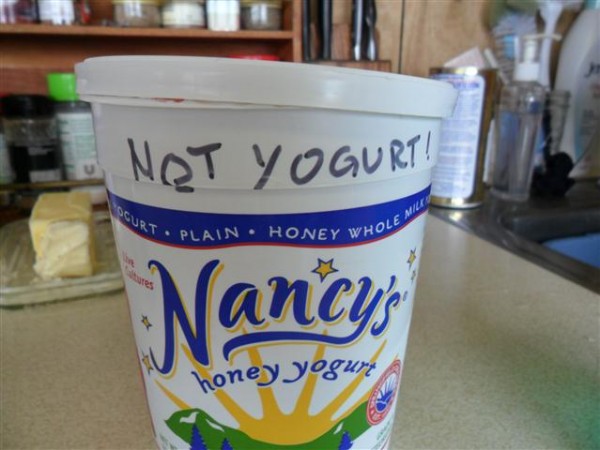
Find the container marked "Not Yogurt" - I should say not!
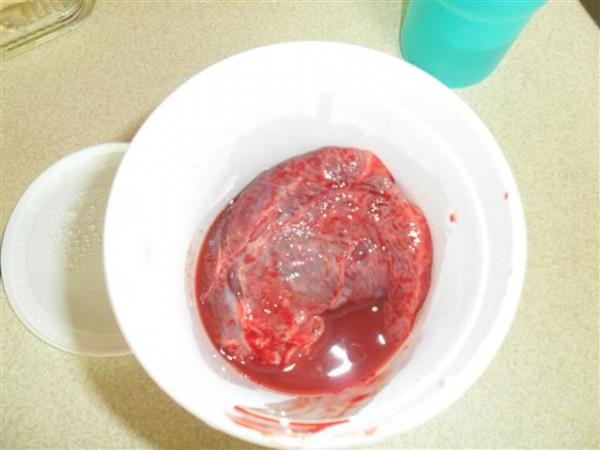
Uncap and look at the surprisingly small organ that is the most sophisticated life support system known to man. Try to ignore the blood.
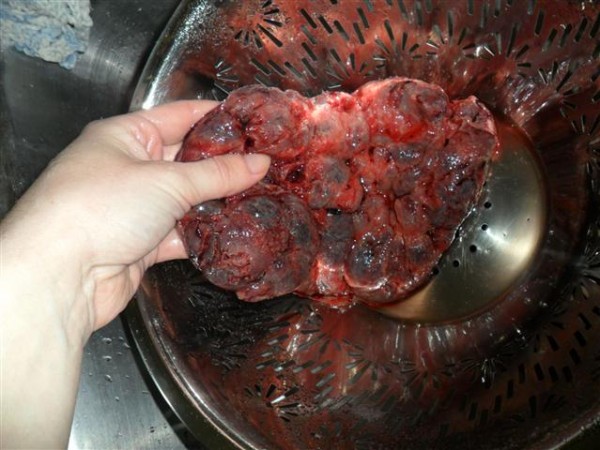
See how one side of the placenta is rough and bumpy - that's the side that was attached to the uterus. Put into colander.
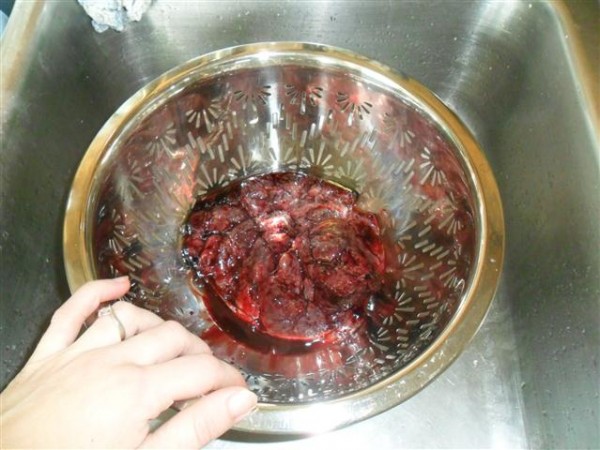
Rinse. Go ahead and touch it. You're going to have to before you're done.
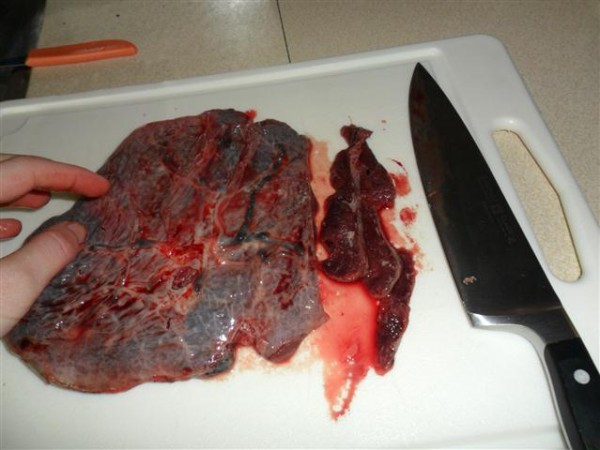
After rinsing well, removing any obvious blood clots, put on the large cutting board. Cut into strips of equal thickness. (I cut the whole thing in half and then cut each half into little strips)
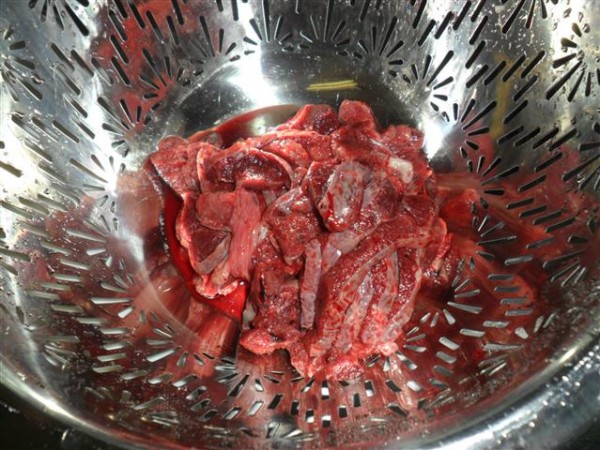
As I went, I put it back in the colander. Then I rinsed my cutting board, because it looked yucky.
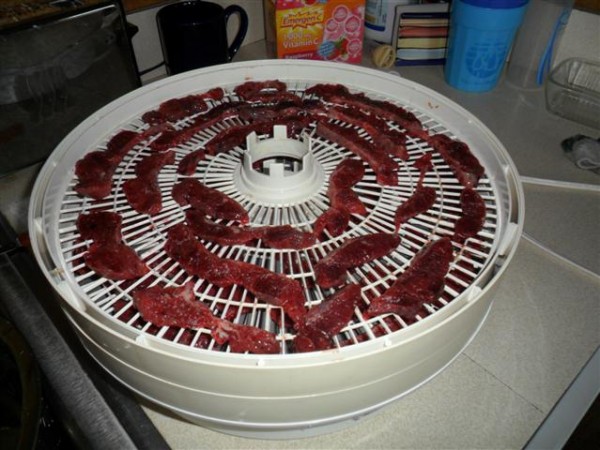
Lay out on dehydrator trays, making sure the pieces do not touch each other. (For air flow reasons)
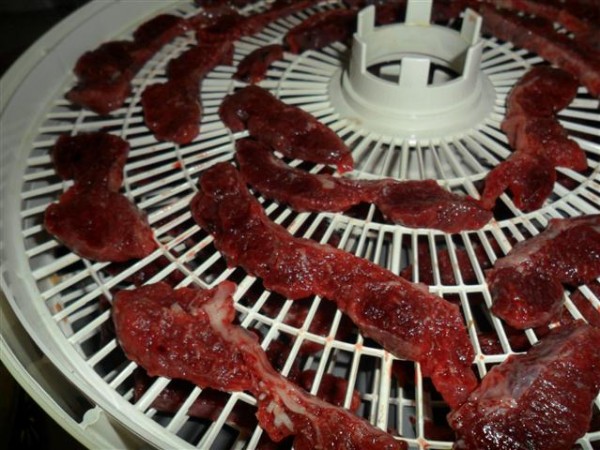
A close up, to satisfy the morbid among (amongst?) you.
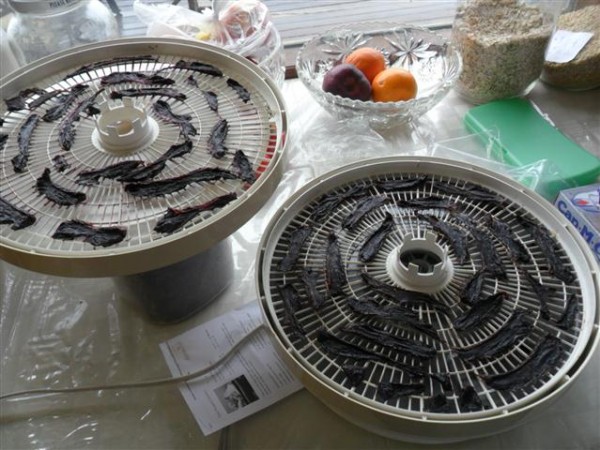
Turn on the dehydrator at a lowish temperature... I used 110 degrees Fahrenheit. I left it there overnight and it was very dry after 24 hours.
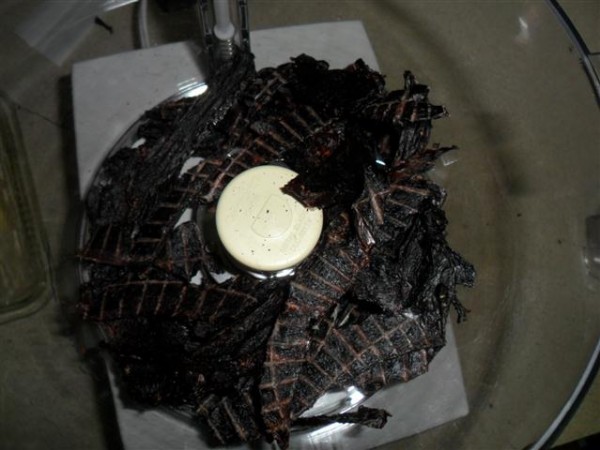
Put gross placenta jerky into coffee grinder or food processor.
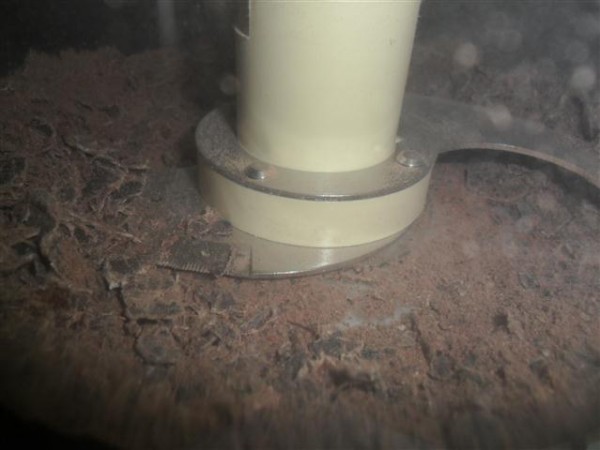
It took a long time to turn into powder. This is after a minute of running full speed. (I did it even longer afterwards) I put a towel over the top, because it was too powder/cloudy and I began to smell it.
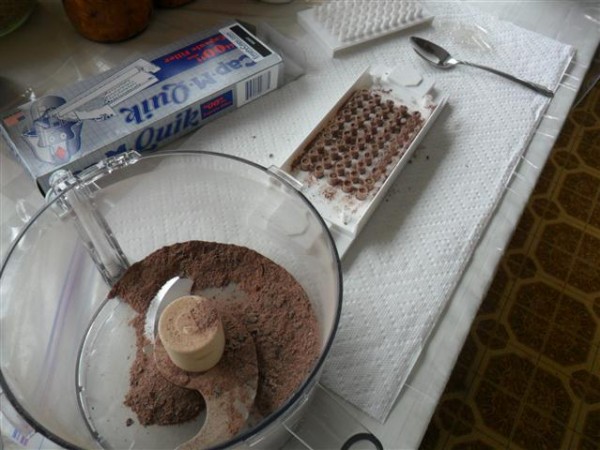
Set up your cool encapsulator on a paper towel or something.
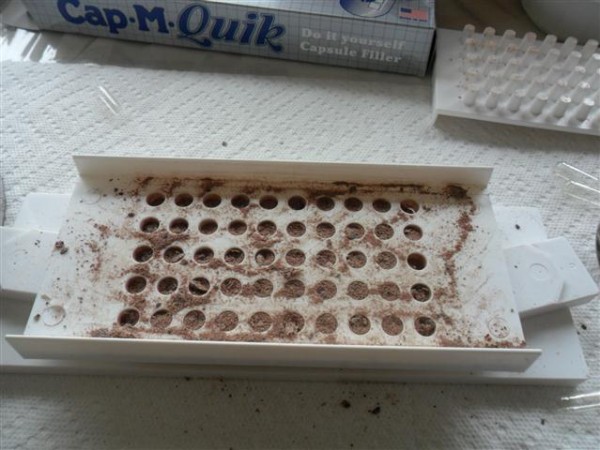
Put in the long parts of the capsules with the tray at the "tall height." Fill with powder. Tamp down with tamper if you want... but don't push hard, because you don't want to ruin the capsules.
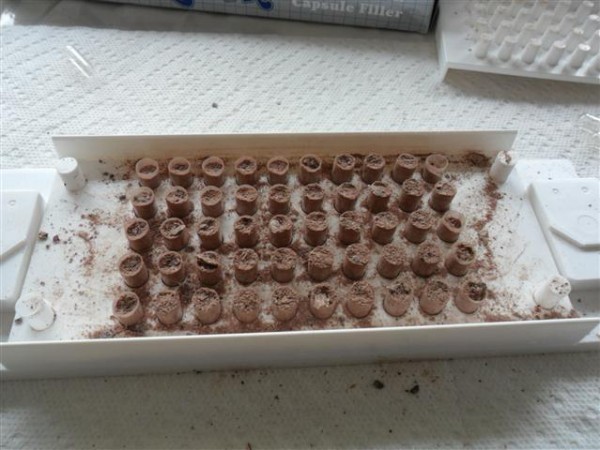
Lower the height of the tray.
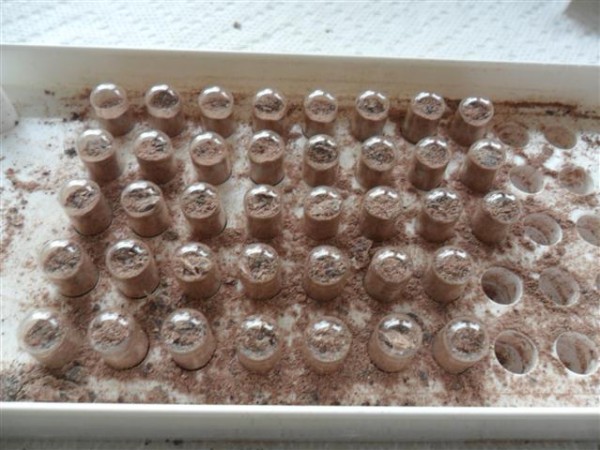
Put caps on. Push down hard enough that the lids "pop" over the little bump. You don't want these to pop open.

This is where I'm supposed to show you a picture of the clean capsules in a little jar, ready for the fridge or freezer. (freezer lasts longer) But I had to get lunch for the kids and didn't take one. So, content yourself with a picture of my daughter kissing her newest cousin. 🙂